
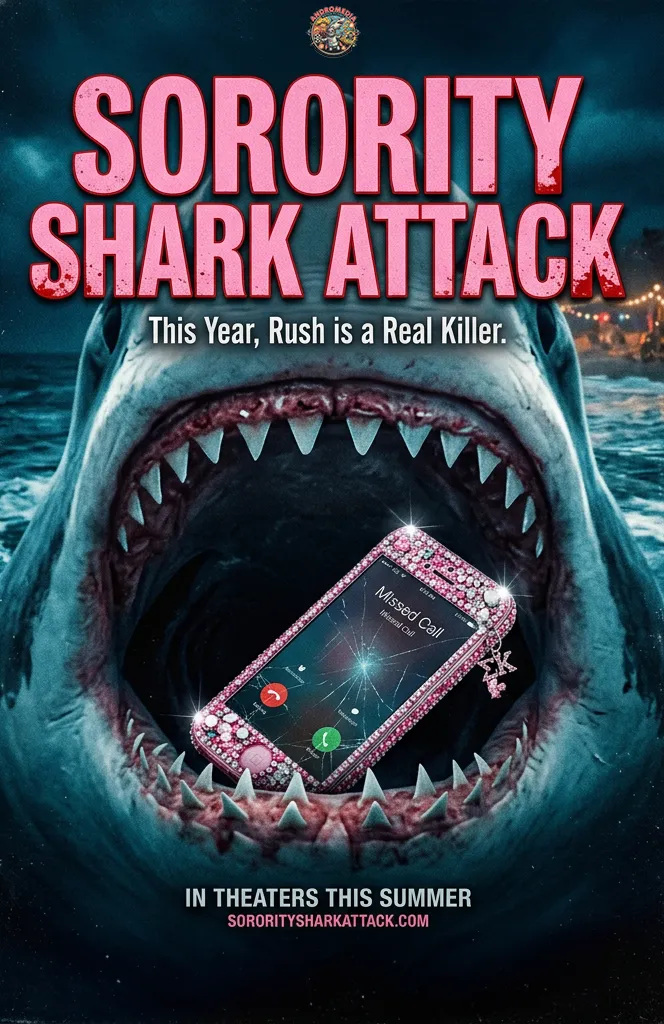
A genetically modified bull shark. A getaway at an Ontario lake. Sorority sisters forced to fight back. That is where a Canadian genre movement begins again, not with a committee, a manifesto, or a polite request for permission. With a shark.
Sorority Shark Attack is the first film launched under Andromedia Distribution’s Canuxploitation revival banner. It brings the old B-movie instinct (make it bold, make it local, make it play) to a new generation of genre audiences. The premise is built to travel. The production is rooted in a specific place. And the ambition reaches beyond a single movie.
That is the point. A re-emergence needs a first film. This is ours.
A Canadian tradition with bite
Canuxploitation describes the low-budget, commercial Canadian genre films that flourished especially in the late 1970s and early 1980s. The movement was shaped in part by a change to the Capital Cost Allowance tax shelter that took effect in 1974. Production surged: from three Canadian tax-shelter features worth about $1.6 million in 1974 to 66 films worth $172 million by 1979. The Canadian Encyclopedia offers a useful overview of the tax-shelter film era.
The films didn’t all look alike, and they certainly didn’t play it safe. The lineage runs through Black Christmas (1974), David Cronenberg’s Shivers (1975) and Rabid (1977), Death Weekend, Cannibal Girls, Ilsa the Tigress of Siberia, and, in 1981, My Bloody Valentine, Prom Night, Terror Train, Things, The Pit and Rock ’n’ Roll Nightmare. Some became influential horror landmarks. Others earned their reputation the hard way: on a shelf full of VHS tapes, waiting to surprise the next curious viewer.
The movement had practical producers at its centre. André Link and John Dunning of Cinépix moved from Valérie (1969) and the “maple syrup porn” era into genre filmmaking, backed Cronenberg, launched Ivan Reitman’s Meatballs, and helped mentor filmmakers including George Mihalka and Don Carmody. The name Canuxploitation arrived later, popularized by Paul Corupe through his writing and Canuxploitation site. Cult audiences kept discovering the films, often one VHS rental at a time.
That history is more than a catalogue of cult titles. It is a reminder that local settings, commercial instincts and resourceful production can create films with lives far beyond their budgets.
The call to make movies with more nerve
In November 2025, Andromedia Distribution announced an initiative to revive and reimagine Canuxploitation: “paying homage to cult predecessors while forging a new path for homegrown genre filmmaking.” The announcement named two initial films: Sorority Shark Attack and Storm Warning.
Bill Dever put the case plainly:
“Canadian movies have long held a respected place in the global film market. I believe it's time to inject more fun and unbridled creativity into Canadian cinema. We have a rich history of genre filmmaking, and we're excited to build upon that foundation.”
He also called for a more commercially varied path for Canadian filmmakers:
“Canada needs a training ground outside of U.S.-based service productions and Telefilm-defined Canadian content. It's time we produce movies with commercial appeal and diversify this industry. There are many Canadian voices deserving of recognition, and we want to shine a light on those who are committed to the success of Canadian cinema.”
That is not an argument against every existing model. It is an argument for making room: for filmmakers who want to build genre movies for audiences around the world, and for an independent film production culture with space to experiment, learn and grow.
Read the November announcement.
A shark, a lake and a survival plan
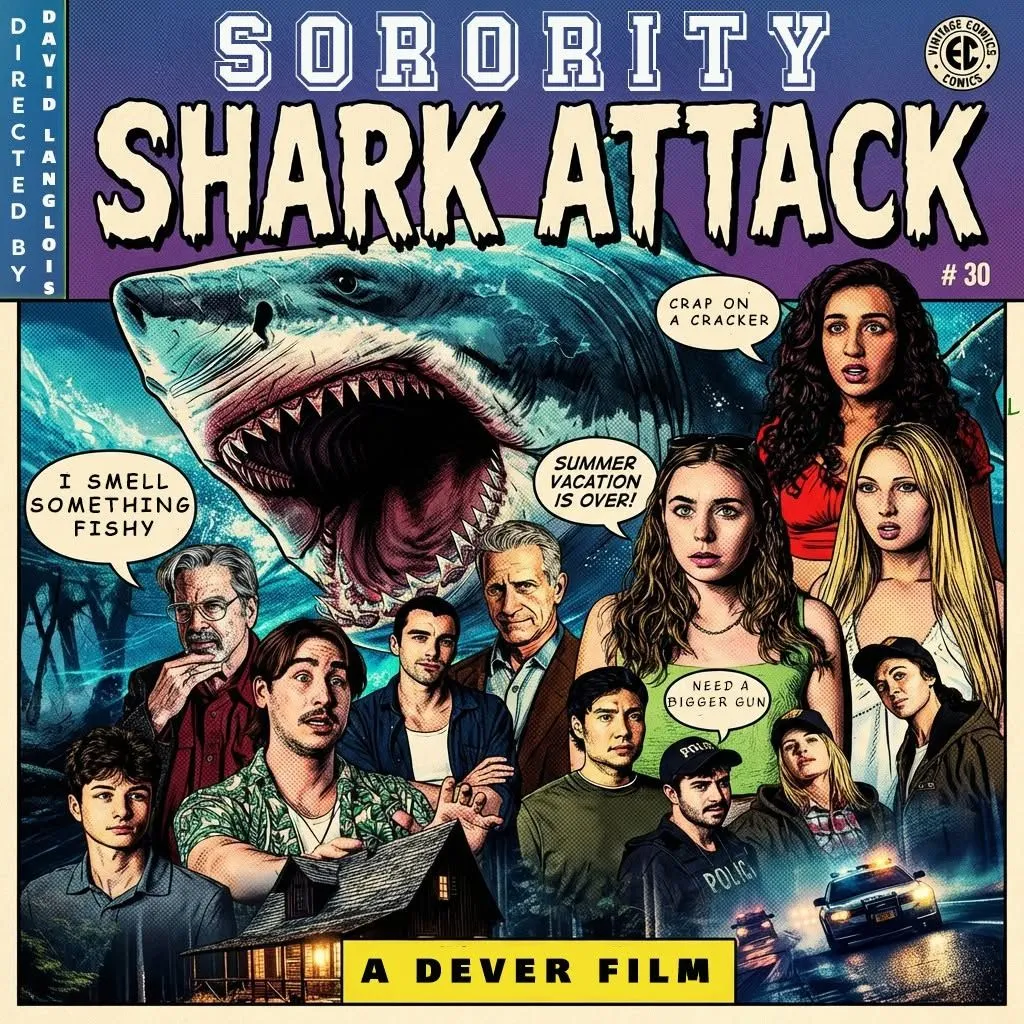
Written by Bill Dever, directed by David Langlois and produced by Sam Dever, Sorority Shark Attack follows a group of sorority sisters whose weekend getaway turns dangerous when a ravenous, genetically modified bull shark moves in. They have to rely on their wits and courage to survive. The film mixes creature-feature horror with comedy, and gives its characters a clear problem to solve before the weekend ends badly.
The setting matters. The production filmed at Rice Lake, in the Bewdley area just south of Peterborough. That regional specificity is part of the film’s identity, not a detail to disguise. Jim Wynorski’s advice to Bill Dever, design movies around locations you know you can get, belongs to the same practical tradition. Start with what is available. Make the place part of the pitch.
The filmmaking pairs practical effects with cutting-edge CGI, bringing a familiar B-movie threat into a contemporary production. Robert Carradine, known for Revenge of the Nerds, plays Professor Marvin alongside a young Canadian ensemble that includes Kate Mayhew, Sarah Ircana, Elle Rose, Paul Matte, Marc Rico Ludwig, Lee J. Poichuk and Martin Egas. Fred Olen Ray and Lloyd Kaufman also appear in the film, connecting the new production to a wider exploitation-film legacy.
Sorority Shark Attack completed principal photography in October 2025, and post-production wrapped on March 16, 2026. It is planned for theatrical release; no release date has been announced. The film’s production page brings the premise and artwork together.
Built for the big, rowdy night out
The revival also looks back to where many B-movies found their natural audience: the drive-in. A drive-in movie asks for a clean hook, a big image and a story that works when the lights go down. A shark in a lake qualifies.
A separate announcement framed Sorority Shark Attack as a relaunch of the drive-in B-movie tradition. That framing suits the film’s direct, crowd-facing ingredients: an instantly legible threat, an ensemble in danger, a setting close to home and enough creature-feature energy to make the title do its job from the marquee.
The goal is not to recreate the past shot for shot. It is to recover its appetite for entertainment, and use today’s tools to put a fresh spin on a durable formula. For an independent film production company, that kind of clarity matters. Audiences know what they are being invited into. The filmmaker has a defined creative challenge. The distributor has a pitch that fits on a poster.
Andromedia’s drive-in announcement lays out that ambition.
One film starts a slate. The slate makes a movement.
A single homage can nod to its influences and stop there. A movement needs another project to follow, and another after that.
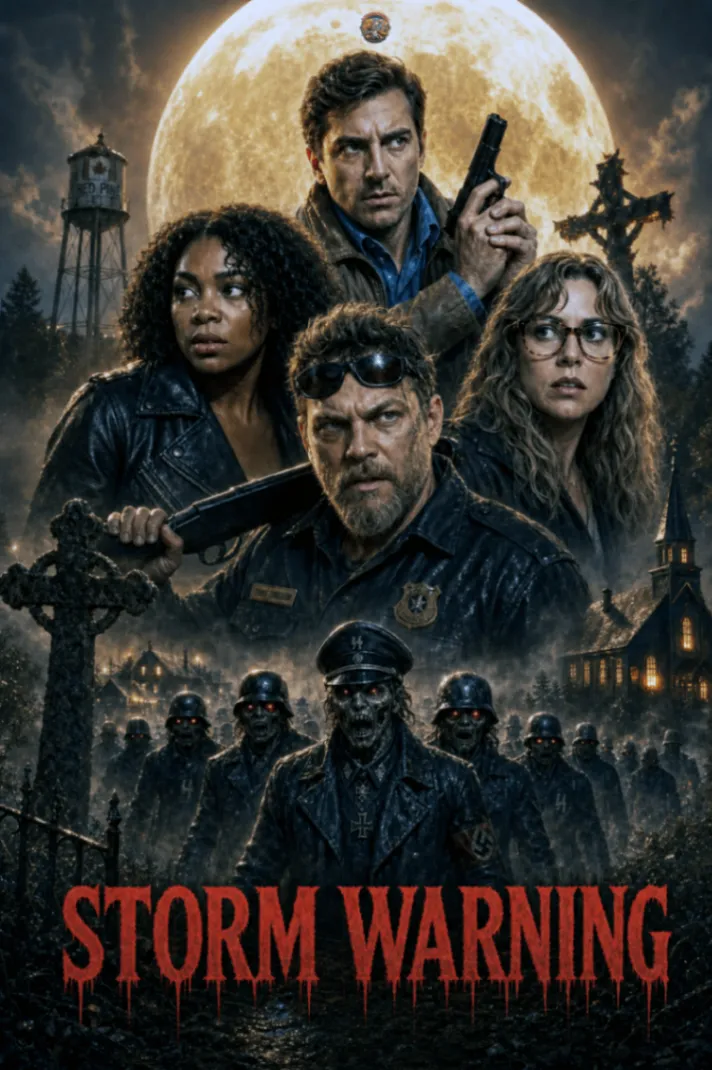
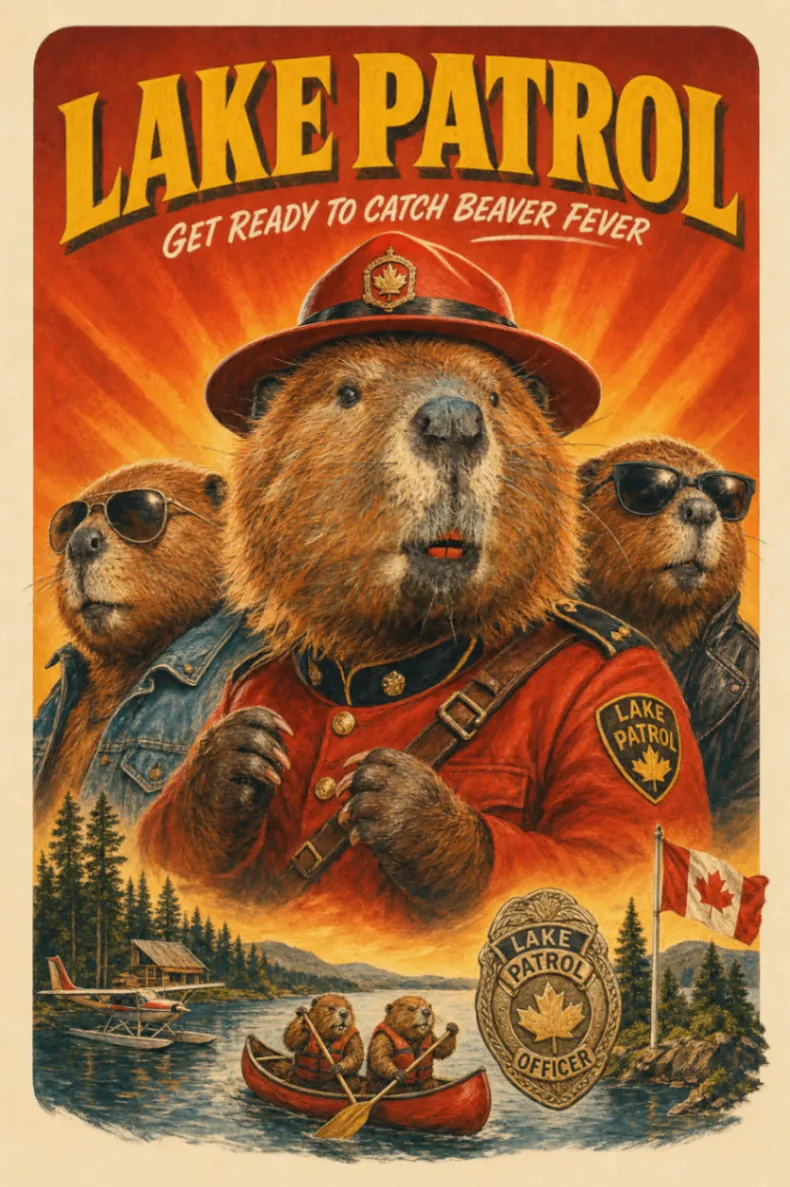
Storm Warning brings a different kind of threat: a hidden SS experiment unleashes undead Nazi stormtroopers in present-day Canada, forcing a local constable, a doctor and town residents to defend a church. In 2026, Lake Patrol turned the slate’s lake-country streak toward straight comedy, with developers threatening a peaceful community and an unlikely militia of intoxicated beavers joining the resistance. A company of recurring players and collaborators helps connect these productions into a larger creative enterprise.
The slate is the distinction between tribute and momentum. Sorority Shark Attack opens the door; Storm Warning and Lake Patrol show that the ambition is not confined to one title. Each project takes a different route through genre, while keeping the production grounded in Canadian places and commercial storytelling.
That is how a re-emergence gathers force: one finished film, then a second, then a slate with room to grow. Explore the Andromeda Studios slate and Sorority Shark Attack’s post-production wrap.
The beginning looks like this
Canuxploitation’s first run left behind more than cult favourites. It left a working lesson: make the movie you can make, make its setting count, and give audiences a reason to show up. Sorority Shark Attack takes that lesson seriously without taking itself too seriously.
A shark cuts through an Ontario lake. A group of young women fights back. A Canadian genre slate moves forward.
The re-emergence has a starting point. This is it.