
More than 200 low-budget features. Monsters, sharks, action heroes, holiday romances, and a career built by showing up, solving problems, and getting the movie made.
Fred Olen Ray is more than a prolific filmmaker. He is a working model for independent genre filmmaking: resourceful, adaptable, and rarely waiting for somebody else to give the green light. At Andromeda Studios, we know the value of that kind of persistence. We make genre movies with ambition, practical ingenuity, and a healthy respect for the people who have been doing the work for decades.
Ray has directed, produced, written, and acted across horror, science fiction, action, crime, thrillers, and holiday films. He has also run Retromedia, released films through home-video distribution, published books, and even wrestled professionally as Fabulous Freddie Valentine. The job description has never been the point. The movie is.
Start with a monster, and make the most of what you have
Ray’s early love of genre came from Famous Monsters of Filmland, Abbott and Costello Meet Frankenstein, and the science-fiction and horror pictures of the 1950s and ’60s. He started making films as a teenager. By 1972, at seventeen, he had self-published three issues of a fantasy-film fanzine called Dagon. That is not just fandom. That is a first step toward building your own pipeline.
After serving in the U.S. Navy, Ray worked at a television station in Orlando. In his spare time, using station equipment, he made The Brain Leeches (1978), a feature he co-wrote for a reported $298. It was a first film with the kind of budget that makes every dollar feel like it should have its own producer credit.

The film was not a shortcut to an easy career. It was proof of a useful principle: start with what you can get, then make the premise work. Ray followed it with Alien Dead, shot for a reported $15,000. This time he put part of the limited budget toward a familiar name: Buster Crabbe, the former Flash Gordon star. The lesson was direct. A low-budget production could still use a recognizable face to give an outrageous genre idea a stronger hook.
In a 2007 interview, Ray explained why he became a director: “I think I became a director because that was the fastest way to get a film made on the independent side of things.” It is hard to imagine a cleaner mission statement for independent film production.
A shark-sized place in the family tree
Ray’s career ran through an astonishing range of titles, from Scalps, The Tomb, and Hollywood Chainsaw Hookers to Evil Toons, Dinosaur Island, and The Shooter. He also made room for romance, television, and holiday movies. The genres changed. The practical instinct endured: find the audience, make the film, and keep moving.
His shark-movie work makes him especially close to our kind of creature-feature madness. Ray directed Super Shark (2011) and produced Jersey Shore Shark Attack (2012), joining the long, glorious tradition of movies that understand a basic truth: put a shark on the poster, and the conversation starts swimming.

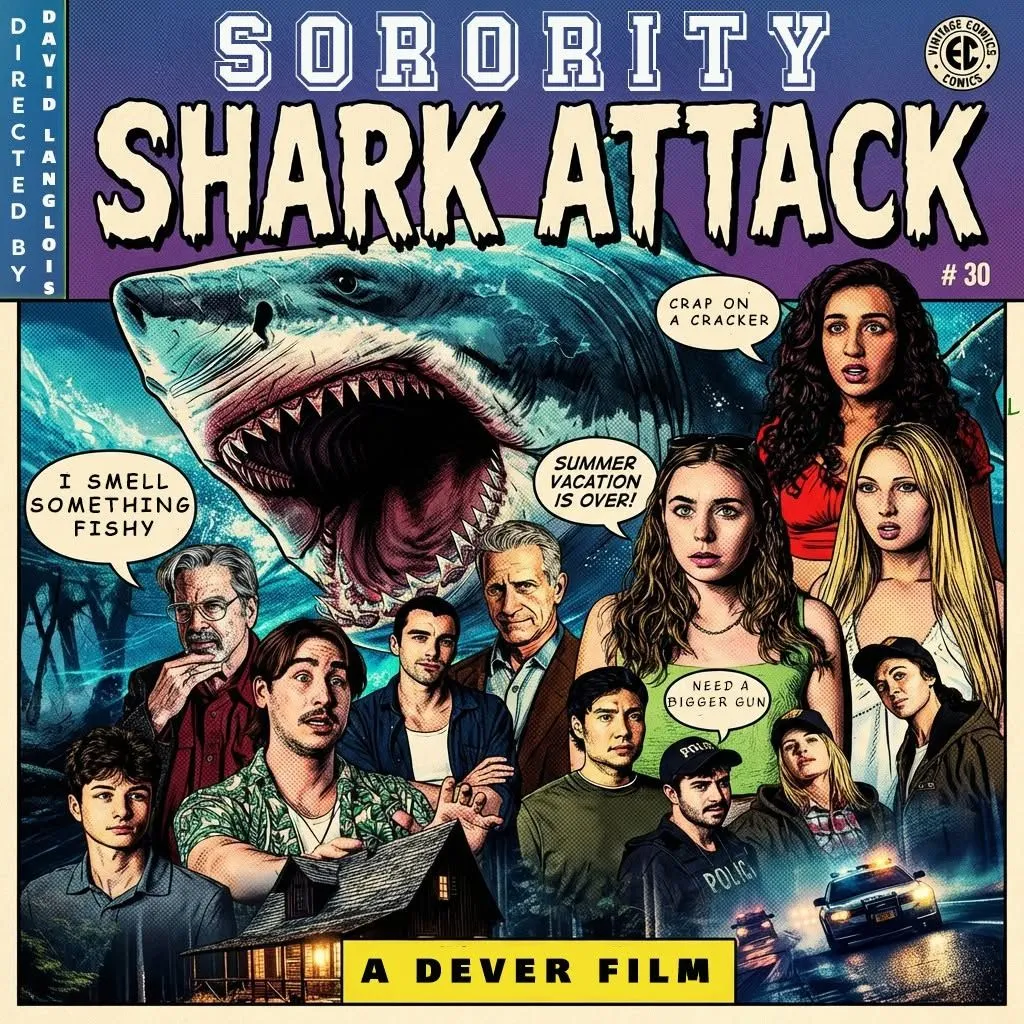
That lineage reaches our own waters with SORORITY SHARK ATTACK. Fred Olen Ray appears in the film. He is also credited with “very special thanks”. A fitting salute to a filmmaker whose shark pictures helped shape the family tree our comedy-horror creature feature happily climbs.
Written by Bill Dever, directed by David Langlois, and produced by Sam Dever, SORORITY SHARK ATTACK follows university students fighting to survive a Canadian cabin getaway after a genetically modified bull shark turns the lake into a hunting ground. The film was shot at Rice Lake, just south of Peterborough, and brings practical effects and CGI together for a creature-feature throwdown rooted in the spirit of ’70s and ’80s exploitation cinema.
Principal photography concluded in October 2025, and post-production wrapped on March 16, 2026, with a theatrical release planned. Take a look at the film’s project page and its post-production announcement.
The working man’s model
Ray has been candid about what low-budget work demands. In that same 2007 interview, he put it plainly: “Money is always a barrier. The more they give you, the more they expect, so you're always caught short, regardless.” He also called it “a working man's world” and said that making a film with no money or schedule can be “ten times harder” than working on a big-budget production surrounded by experienced talent.
That is not a complaint dressed up as wisdom. It is a description of the job. When resources run short, independent filmmakers have to adapt without losing the hook. When the schedule tightens, they have to protect the moments that sell the movie. And when a project is complete, they have to think about how it finds its audience. Ray’s career has stretched across production, distribution, and genre packaging because independent filmmaking does not neatly stop at “cut.”
He also made the kind of work that proves no single tone owns the genre aisle. “I like to shoot things and blow stuff up. I also like comedies,” he told Badmovies.org. “Don't like erotic thrillers.” A man with hundreds of films behind him has earned the right to keep his preferences concise.
For an indie film production company, that combination of creative range and commercial awareness is worth studying. Ray’s films understand their audiences, their scale, and the entertainment promise of the premise. The titles do not hide the goods. Neither should the filmmaking.
Keep the camera rolling
Fred Olen Ray’s career is a tribute to the people who keep making genre pictures: the producers stretching a budget, the crews finding one more solution, and the filmmakers who refuse to wait for perfect conditions. His path (from a teen fanzine to a $298 feature, from independent horror to shark movies and television) shows what persistence can build when it meets practical craft.
At Andromeda Studios, we tip our hat to a lifer who helped keep the low-budget imagination alive. His work belongs to the same broad, unruly tradition that fuels SORORITY SHARK ATTACK and our wider genre slate.
We believe that tradition has a future, too. Low-budget genre producers and small, single-screen exhibitors can build direct regional partnerships, bring distinctive films to local audiences, and make the event part of the attraction. A focused six-week marketing runway can help a movie meet the specific crowd most ready to show up for it.
If you program a theater, make genre films, or help connect films with audiences, meet us through our distribution team. The next great creature-feature partnership might be closer than you think.